Journal
Eating by Color in Chinese Medicine: The Five-Color Food Map and Why It Works
By Jin Yang · October 2, 2026
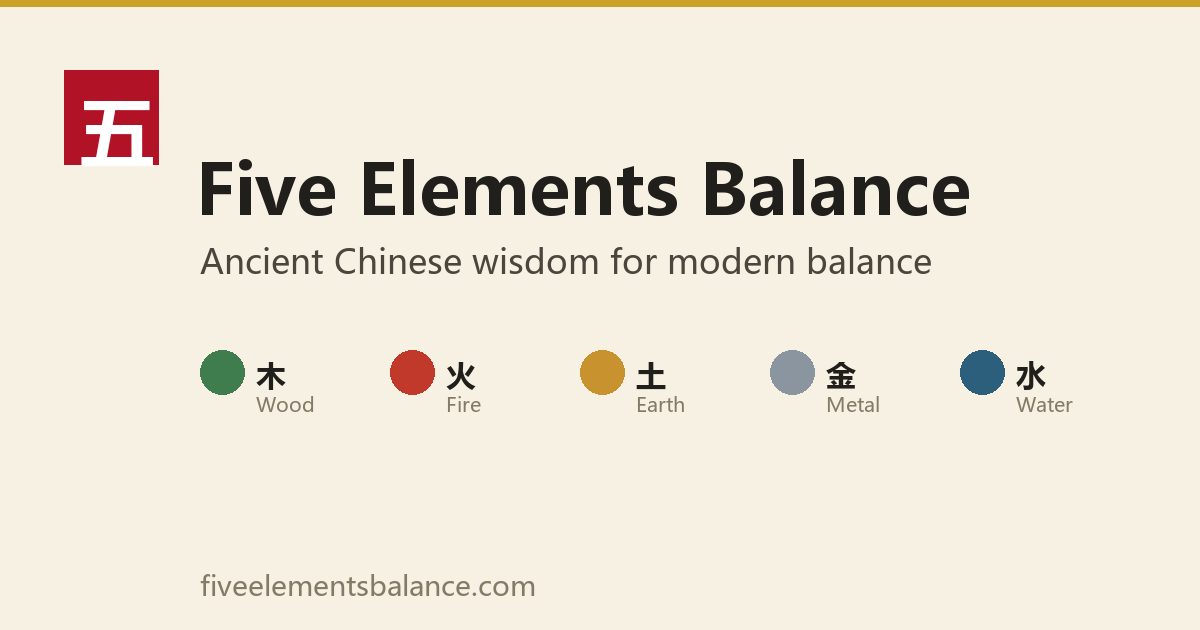
If you walk through a Chinese market with this framework in mind, the produce map starts to read like a chart. Green leafy tops in spring, red dates and goji in the dried-goods aisle, yellow millet and squash in the grain bins, pale pear and lotus root in autumn, black beans and sesame in the winter stack. Chinese food therapy (食疗, shí liáo) organizes a lot of that everyday instinct into one tidy row: five colors, each tied to an element and an organ system.
This is a food-and-culture guide, not medical advice. No color of food treats any condition, and the tradition itself frames color as a way to shop and cook — never as a diagnosis. If you notice a persistent change in your own complexion, that is a reason to see a clinician, not to consult a chart.
I will be honest about the limits up front, because this is exactly where color theory drifts into nonsense: the correspondence is a shopping and cooking heuristic, not a mechanism. A black bean is a good food; it is not a kidney treatment. The real value of the color row is that it makes “eat a varied diet” concrete and memorable — the same job the Western “eat the rainbow” advice does, arrived at by a different route.
The five-color food map
| Color | Element | Organ | Traditional read |
|---|---|---|---|
| Green (青) | Wood | Liver | Young, fresh, upward-moving |
| Red (赤) | Fire | Heart | Warming, blood-nourishing |
| Yellow (黄) | Earth | Spleen | Centering, easily digested |
| White (白) | Metal | Lungs | Moistening, clearing |
| Black (黑) | Water | Kidneys | Dense, restorative, stored |
Each color is less a rule than a nudge: reach for a spread across the week rather than a single shade. The point is variety, not a mandate to eat monochrome.
Why the colors map to organs
The correspondence is observational before it is symbolic. Wood is the green of new leaves breaking in spring; Fire is the red of flame and the flush of a hot face; Earth is the yellow of the loess soil on the North China Plain; Metal is the white of frost, polished bronze, and bleached bone; Water is the near-black of a moonless winter night. The Yellow Emperor’s Inner Canon (《黄帝内经》) set color alongside season, flavor, and organ in a single grid, and later herbals like the Compendium of Materia Medica (《本草纲目》) extended the reasoning to hundreds of foods.
None of that makes a black bean a kidney treatment. What it gives you is a memorable shopping heuristic: when in doubt, widen the palette instead of narrowing it.
What counts as each color
- Green (Wood): leafy greens, celery, sprouts, broccoli, sour green apple, fresh herbs. The young-and-fresh category, traditionally paired with spring and with keeping things moving. The character (青, qīng) in the classical texts actually spans green into blue-green, which is why you will see the same word glossed both ways in different books.
- Red (Fire): red dates (红枣, hóng zǎo), goji berries (枸杞, gǒu qǐ), tomatoes, hawthorn (山楂, shān zhā), adzuki beans (红豆, hóng dòu), beet. The warming, blood-associated foods.
- Yellow (Earth): millet, squash, sweet potato, corn, yellow soybeans, pumpkin. The centering, easily digested category — usually cooked soft and eaten warm.
- White (Metal): pear, white fungus (雪耳, xuě ěr), lotus root (莲藕, lián ǒu), daikon, almonds, tofu. The moistening foods you reach for against autumn dryness (秋燥), when throat and skin go papery.
- Black (Water): black beans (黑豆, hēi dòu), black sesame (黑芝麻, hēi zhī má), seaweed, walnuts, dark mushrooms. The dense, mineral-heavy winter category.
Color and flavor are two different rows
A common slip is to treat color and flavor as the same axis. They are not. Green food is usually Wood, but the flavor that belongs to Wood is sour, and plenty of green food — bitter greens, sweet squash — is not sour at all. The color row tells you what to shop; the flavor row tells you what the food does. Use them together and you get a fuller picture: red goji berries are both Fire-red and gently sweet (Earth-friendly), which is partly why they show up in so many mild tonics.
The master reference for the flavor half is the Five Elements Taste Chart; the color half is the row you are reading now.
How to use it without overthinking
You do not need all five colors at every meal. A simple habit: look at your week and ask whether your plate covered the whole palette or collapsed into two shades. Most American plates skew beige-and-green — grains and lettuce, with little red, white, or black. One deliberate addition per day is enough: a handful of goji in oatmeal (red), a pear in the afternoon (white), black beans instead of pinto (black), squash with dinner (yellow).
The modern parallel is the reason to take this seriously. Plant pigments do measurably different things — anthocyanins in black and deep-purple foods, carotenoids in the yellow-orange range, chlorophyll and folate in greens. Chinese food theory arrived at “eat all five colors” by a different route and landed somewhere a dietitian would recognize.
Where color stops being medicine
Two honest boundaries keep the color row useful. First, a food’s color organizes a shopping list; it does not establish a mechanism, and it certainly does not substitute for a clinician. A persistent, unexplained change in your complexion is a reason to make an appointment, not to consult a chart. Second, color in your home is environmental and psychological, not physiological — paint a bedroom Water-black if it helps you sleep, but do not expect the wall to reach your kidneys.
What the color row is genuinely good at is the thing most of us skip: noticing, and widening, what we eat.
Quick self-check
| Statement | Feels like me |
|---|---|
| My plate this week was mostly one or two colors | ☐ |
| I gravitate toward the same shades year-round | ☐ |
| I rarely eat anything black, white, or red in a day | ☐ |
| I’d rather use the color row to shop than to diagnose | ☐ |
| “Eat the rainbow” already makes sense to me | ☐ |
| I want the logic behind the chart, not just the chart | ☐ |
Three or more checks and the color row will earn its keep mostly as a nudge toward eating a wider range. If you checked the diagnostic-use row, keep the boundary above in mind — that is this framework’s failure mode.
Where to go next
- See color alongside every other correspondence in the Five Elements Color Meaning guide.
- The flavor row works the same way and is even more practical: The Five Elements Taste Chart.
- Turn color and flavor into a single plate with The Five Flavors: balancing your elements through food.
- Find your own dominant element with the Five Elements Personality Test.
- The five-color articles, one element at a time: Green Foods for the Liver, Red Foods for the Heart, Yellow Foods for the Spleen, White Foods for the Lungs, Black Foods for the Kidneys.
- The practical, week-by-week version: Eating by Color: A Practical Weekly Habit.
- The chart as a single soup pot: The Five-Color Vegetable Soup.
Shop the pantry
As an Amazon Associate, Five Elements Balance earns from qualifying purchases.