Fire Element
Fire Element & the Heart: Why Chinese Medicine Calls It the Emperor
By Jin Yang · August 14, 2026
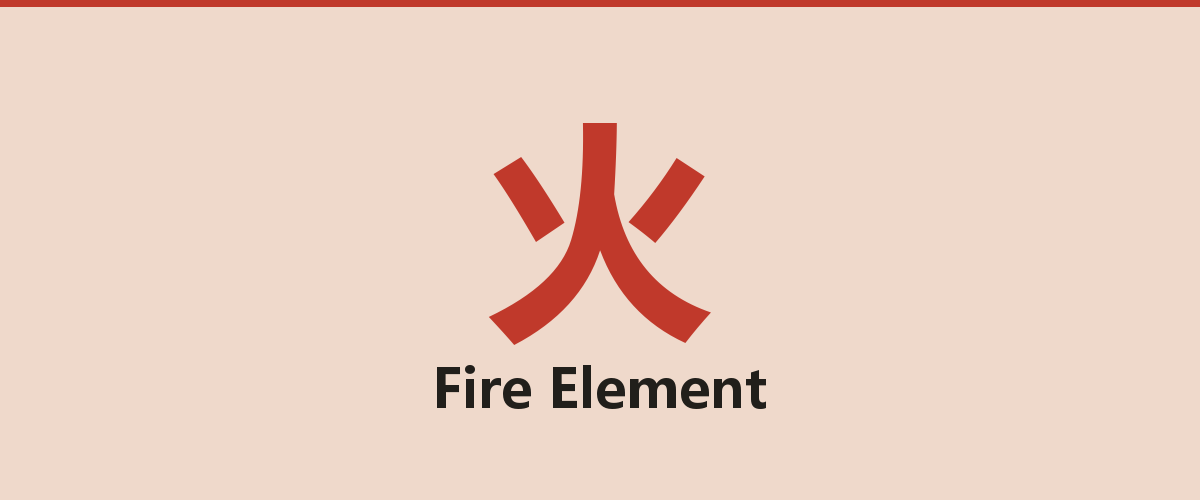
In Western anatomy the heart is a pump. In Chinese medicine it is an emperor.
That single difference in framing explains most of the confusion Western readers feel when they first meet the Fire element. Chinese medicine gives the heart (心, xīn) an unusually large job: it doesn’t just move blood, it’s said to house the shen (神, shén) — usually translated as spirit, consciousness, or the calm awareness that lets you sleep, speak, and relate coherently. The heart, in this system, is the seat of who you are when you’re settled.
As always: this is a traditional framework for understanding patterns and shaping habits, not a diagnostic system and not medical advice. Chest pain, real palpitations, or sleep broken for weeks belongs with a clinician, not a tea.
What the heart governs in Chinese medicine
Fire (火, huǒ) is the phase of maximum expansion and outward warmth. The heart sits at its center, and three jobs define it:
- It governs blood and vessels. The obvious one, shared with Western physiology — the heart moves blood and the tradition reads the pulse as a direct window into its state.
- It houses the shen. This is the part that surprises people. The heart is described as the organ that anchors consciousness, so a restless mind at night, scattered speech, or a sense of being unmoored is read here first.
- It connects to the small intestine. The pairing seems odd until you hear the logic: the small intestine “separates the clear from the turbid” — it’s the body’s sorting station, a nice echo of the mental clarity Fire is meant to bring.
The emotion assigned to Fire is joy (喜, xǐ) — and the classics are careful to warn that excessive joy is itself a disturbance. Not sadness, not fear: the specific state of running on constant peak experiences, which sounds delightful until you meet someone who lives there.
The heart and small intestine pair
The small intestine (小肠, xiǎo cháng) is the heart’s partner, and the pairing is about discernment. On the physical level it receives what the stomach has broken down and sorts the useful from the waste. On the subtler level the tradition uses the same image for the mind: a heart that can’t house the shen is a heart that can’t sort clear from turbid, and the result is a mind that won’t power down.
On the traditional body clock, the heart’s window is 11 a.m. to 1 p.m. — the brightest stretch of the day, exactly the tidy symmetry this system loves. The small intestine follows in the early afternoon, which is the classical argument for the largest meal landing midday and lightening up by evening.
Balanced heart versus scattered Fire
The framework earns its keep by naming two very recognizable states.
When Fire burns steadily, you’re warm without being needy. You connect easily, laugh easily, and return to calm just as easily. Sleep arrives without negotiation. You can be enthusiastic about something without needing it to become your whole identity.
When Fire flares or scatters, the same warmth turns restless:
- A mind that won’t power down at bedtime, even when the body is exhausted
- A fluttery, anxious feeling in the chest — the tradition’s phrase is that the spirit isn’t anchored
- Talking faster than usual; laughing at things that aren’t quite funny
- Heat signs: flushed face, night sweats, a mouth that feels dry
- Emotional whiplash — genuine highs followed by a flat, hollow afternoon
There’s also the opposite pole: Fire gone quiet. Flat affect, no spark, social withdrawal, a sense that nothing is particularly interesting. In the five-element reading these are the same axis, not two different problems — both are the emperor not sitting on the throne.
Working with the heart the Fire way
The counterintuitive part: you don’t support the heart by adding heat. You support it by giving it a container.
Use bitter deliberately. Bitter (苦) is Fire’s flavor, and the classics describe it as draining and descending — the flavor that pulls excess heat downward. Practically: dark leafy bitters like dandelion greens, endive, or radicchio, plus green tea and a modest amount of dark chocolate. Chrysanthemum flowers (菊花, jú huā) are the classic summer cooling infusion.
Protect the wind-down. For Fire types the evening matters more than the morning. Dimmer light, no arguments after nine, and something warm and calming in a cup do more than any daytime intervention. A Longan & Lily Bulb Tea is the traditional evening choice for an unsettled spirit.
Stop chasing stimulation. This is the hard one. Scattered Fire feels like it needs more — more coffee, more conversation, more scrolling. The traditional read is the reverse: the flame is already too high and needs shelter, not fuel.
Let joy be ordinary. Sustainable warmth beats spikes. The classics list excessive joy as a genuine Fire disturbance precisely because constant peak experiences burn the emperor out.
How the heart connects to the other elements
The heart never acts alone. In the generating cycle, Wood feeds Fire (drive fuels enthusiasm) and Fire generates Earth (warmth creates the ground that digests and nourishes). In the controlling cycle, Water cools Fire (rest and reserves keep the flame from running wild) and Fire controls Metal (warmth softens rigidity).
The Water-Fire relationship is the one worth remembering. In classical thinking, most “too much Fire” is really “not enough Water” — a body low on rest and reserves runs hot by default. Before doing anything else about restless evenings, the tradition looks at sleep first. It’s the least glamorous intervention and usually the correct one.
Quick self-check
| Statement | Feels like me |
|---|---|
| My mind races at bedtime even when my body is tired | ☐ |
| I feel a fluttery or restless sensation in my chest under stress | ☐ |
| I talk faster and laugh more when I’m anxious | ☐ |
| Heat, humidity, and stuffy rooms bother me more than most people | ☐ |
| Big emotional highs are usually followed by a flat crash | ☐ |
| Connection and conversation energize me more than solitude | ☐ |
Four or more checks means Fire is a strong voice in your system. Two or fewer and you likely lead with a different element — most of us are a blend.
Where to go next
- Read the full Fire element overview for organs, foods, and seasonal rhythm.
- Go deeper in Fire Element Meaning in TCM for the whole Fire picture.
- See the seasonal practices in Fire Element & the Summer Heart.
- Map the organ across all five phases in The Five Elements Organs Chart.
- Try the cooling Chrysanthemum & Goji Tea as a summer ritual.
- Eating for the season? Summer Cooling Foods in Chinese Wellness sorts the cooling list from the merely cold.
- Snack shopping? Best Jujube Red Date Snacks covers which bags are actually worth buying.
- For the emotional side of Fire, Joy and the Heart in Chinese Medicine looks at the one feeling the classics say can run too hot.
- For the practices that settle a flickering mind, Calm the Mind in Chinese Medicine walks through calming the shen without sedation.
- The flavor angle: Bitter Foods in Chinese Medicine covers why a little bitterness cools Fire and where too much becomes the problem.
- The grocery version of this organ: Red Foods for the Heart covers the Fire-red foods Chinese medicine reaches for.
- For the nights when sleep breaks rather than refuses to arrive, Lotus Seed Tea is the gentlest cup in the Fire cupboard.
- If the complaint is thinness rather than heat — cold hands, pale lips, a flat tiredness — Red Date Tea is the building cup instead of the cooling one.
Shop the pantry
As an Amazon Associate, Five Elements Balance earns from qualifying purchases.